Coastal Luxury: Mastering Cartagena’s Iconic Cazuela de Mariscos

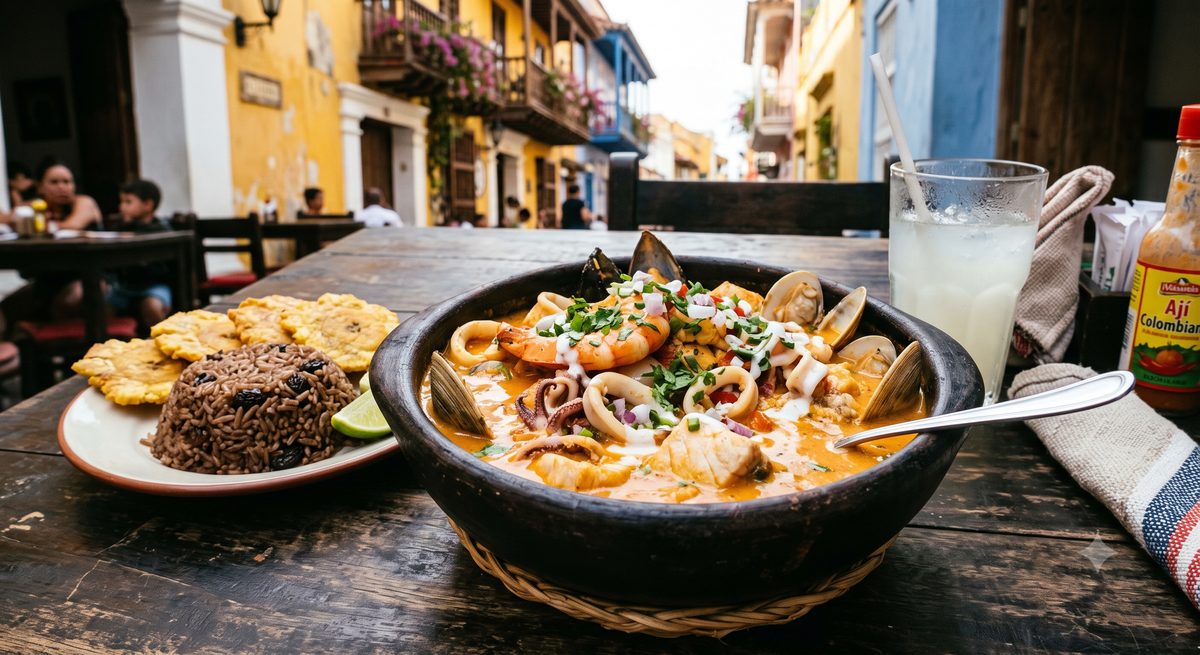
There is a specific moment when Cartagena reveals its true character. It isn’t just in the bougainvillea spilling over colonial balconies or the salt breeze blowing off the Caribbean—it’s at the table, right as a steaming clay bowl of Cazuela de Mariscos reaches you.
Bright with sweet peppers, rich with heavy cream and fresh coconut milk, and overflowing with local seafood, this dish is the crown jewel of coastal Colombian cooking. It bridges the gap between humble beachside cooking and refined regional gastronomy.
The Culinary Story
Unlike standard European seafood stews like Bouillabaisse or Cioppino, Cartagena’s Cazuela relies on a distinct tropical base: coconut milk reduced with a golden soffrito of sweet ají dulce peppers, garlic, and scallions. Finished with a splash of white wine, a touch of heavy cream, and local white fish and shellfish, the result is a balance of savory, sweet, and oceanic notes.
Pro-Tips for the Home Host
- The Pot Matters: Traditional restaurants serve this dish in heat-retaining black clay bowls (cazuelas de barro). At home, a heavy Dutch oven or cast-iron pot retains heat best and develops the deep flavors of the broth.
- Seafood Timing: Add seafood in stages based on cook times. Firm fish and squid go in first; delicate shrimp and clams go in last to prevent rubbery textures.
- Pairing: Serve alongside classic Arroz con Titoté (coconut rice), fried patacones (green plantains), and an ice-cold crisp Sauvignon Blanc or traditional Limonada de Coco.
CAZUELA DE MARISCOS [Caribbean Seafood Stew] PREP: 25 mins │ COOK: 30 mins YIELD: 4 Servings
Cazuela de Mariscos Cartagenera
Ingredients:
For the Seafood & Stock
- 1 lb (450g) firm white fish (mahi-mahi, sea bass, or snapper), cut into 1.5-inch cubes
- 1/2 lb (225g) large shrimp, peeled and deveined
- 1/2 lb (225g) squid, rings and tentacles
- 1/2 lb (225g) clams or mussels, scrubbed clean
- 3 cups seafood stock (or fish stock)
For the Coconut & Pepper Base
- 2 tbsp unsalted butter
- 1 tbsp olive oil
- 1 medium yellow onion, finely diced
- 4 cloves garlic, minced
- 1 red bell pepper, finely diced
- 1 green bell pepper, finely diced
- 3 scallions, finely chopped
- 1 tsp ground cumin
- 1/2 tsp smoked paprika
- 1/3 cup dry white wine
- 1 cup full-fat unsweetened coconut milk
- 1/2 cup heavy cream
- 1 tbsp tomato paste
- Salt and freshly ground black pepper, to taste
For Serving
- Fresh cilantro, chopped
- Lime wedges
- Fried plantains (patacones)
1.Build the Soffrito Base: Approx. 8-10 minutes.
Heat the olive oil and butter in a large Dutch oven over medium heat. Add the onion, red and green bell peppers, scallions, and garlic. Cook, stirring occasionally, until vegetables are soft and translucent (about 6 to 8 minutes). Stir in the cumin, smoked paprika, and tomato paste, cooking for another minute until fragrant.
2.Deglaze and Simmer the Broth: Approx. 10 minutes.
Pour in the dry white wine, scraping up any browned bits from the bottom of the pot. Let it simmer until reduced by half (about 2 minutes). Pour in the seafood stock and full-fat coconut milk. Bring to a gentle simmer, turn the heat to medium-low, and let the broth meld together for 10 minutes.
3.Cook the Seafood in Stages: Approx. 6-8 minutes.
Stir in the heavy cream and bring the liquid to a gentle simmer (do not boil hard). Add the firm fish cubes and squid first, simmering for 3 minutes. Then, gently nestle in the shrimp and clams/mussels. Cover the pot and simmer for 4 to 5 minutes until the clams open wide and the shrimp turn pink and opaque. Discard any clams that remain closed.
4.Finish and Plate: Serve immediately.
Season generously with salt and black pepper to taste. Ladle the hot stew into deep bowls (pre-warmed clay bowls if you have them). Garnish with chopped fresh cilantro and serve immediately with fresh lime wedges on the side.
Wanna know how to make the side dish? Arroz con Titoté (Cartagena Coconut Rice)
Here is the traditional recipe for Arroz con Titoté to pair with your Cazuela de Mariscos.
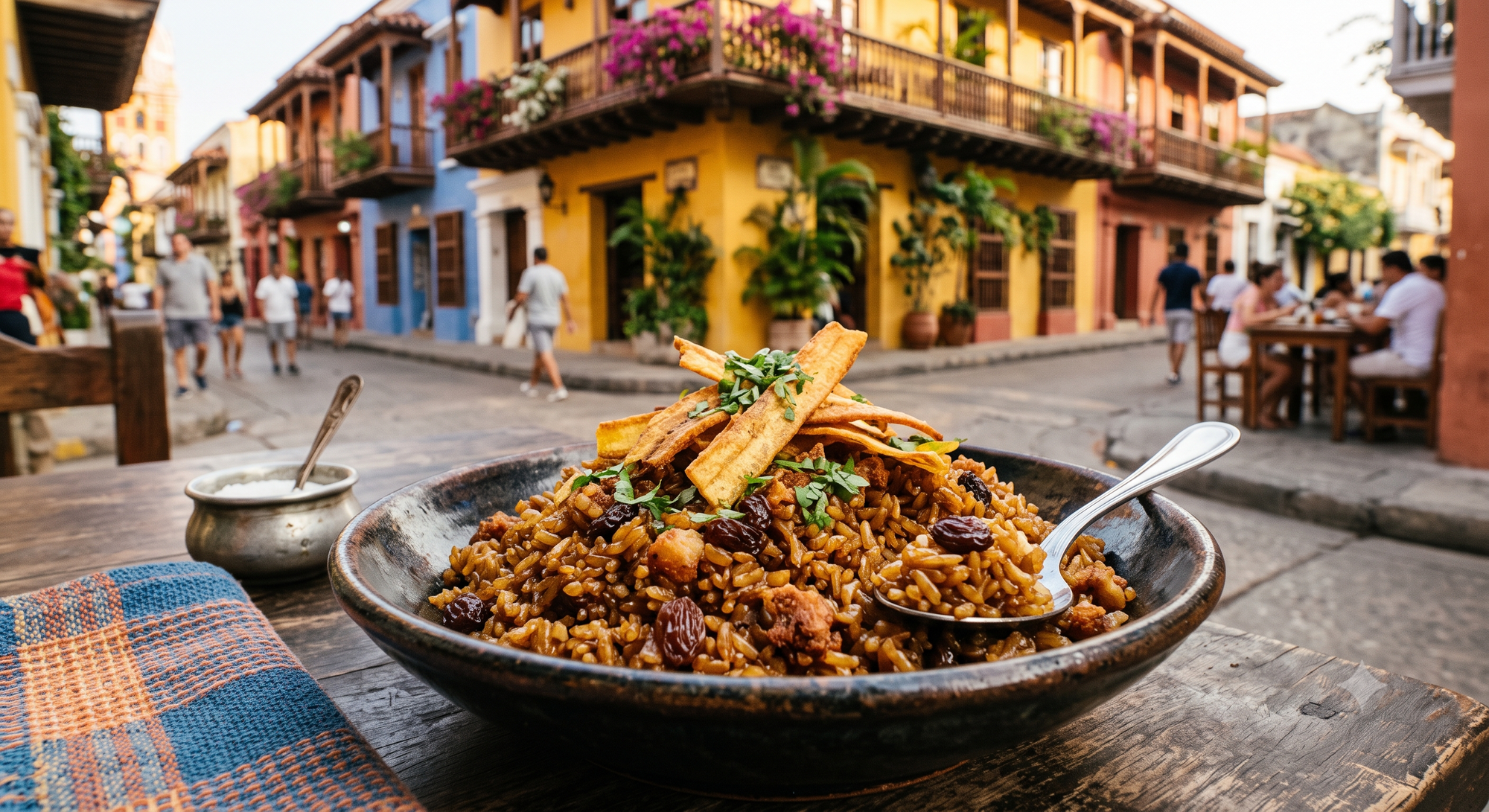
The Secret: Making Titoté
The defining element of traditional Caribbean coconut rice is titoté—the rich, brown coconut oil solids formed by reducing fresh coconut milk until the water evaporates and the natural coconut fats fry themselves into caramelized tidbits.
ARROZ CON TITOTÉ [Cartagena Coconut Rice] PREP: 10 mins │ COOK: 35 mins YIELD: 4-6 Servings
Ingredients:
- 4 cups unsweetened full-fat coconut milk (or coconut cream for faster caramelization)
- 2 tbsp panela (grated Colombian raw cane sugar) or dark brown sugar
- 2 cups long-grain white rice, rinsed and drained
- 1/2 cup raisins
- 1 tsp salt
- 2 cups water (or second-press coconut milk)
Step-by-Step Instructions
- Caramelize the Coconut Milk (Create the Titoté):
In a medium heavy-bottomed pot or Dutch oven, pour in 2 cups of the full-fat coconut milk and add the grated panela (or brown sugar). Bring to a boil over medium-high heat. As the liquid evaporates, the mixture will thicken, turn glossy, and separate into clear oil and white solids. Continue cooking and stirring frequently as the solids fry in their own oil until they turn a deep caramel-brown color (titoté). This takes about 15–20 minutes. - Toast the Rice:
Add the rinsed white rice directly into the pot with the caramelized titoté and coconut oil. Stir constantly for 2 minutes to coat every grain in the rich, fragrant oil. - Add Liquids & Seasonings:
Pour in the remaining 2 cups of coconut milk, 2 cups of water, raisins, and salt. Stir well to dissolve any caramelized bits stuck to the bottom of the pot. - Simmer Until Water Evaporates:
Bring the mixture to a boil over medium-high heat and let it cook uncovered until most of the liquid is absorbed and small steam holes form on the surface of the rice (about 8–10 minutes). - Cover & Fluff:
Reduce heat to the lowest setting, cover the pot with a tight-fitting lid, and steam for 15 minutes until the rice is tender. Remove from heat, let it sit covered for 5 minutes, then fluff gently with a fork before serving. Fluff in crispy plantain chips or top with fried patacones for added crunch.
With both recipes in hand—the rich, aromatic Cazuela de Mariscos and its quintessential sweet-savory partner, Arroz con Titoté—your feature captures the very essence of Cartagena’s coastal elegance. Together, they offer Vince Mag readers more than just a meal; they deliver an immersive, tropical dining experience that bridges street-food soul with table-ready sophistication.
A Special Note: Glenna Gonzalez, Co-Publisher of VINCE Lifestyle Magazine
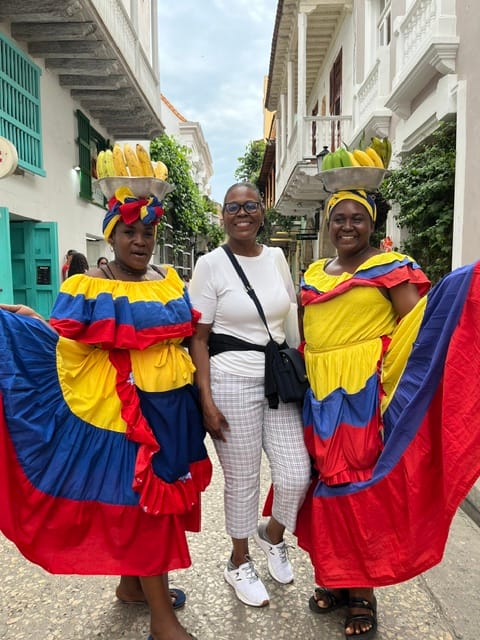
There is a moment when Cartagena opens up to you—not as a tourist destination, but as a living, sensory experience. Stepping into the walled city (El Centro) or wandering through the vibrant, mural-lined streets of Getsemaní, you immediately feel the rhythm of the Colombian Caribbean: the warm trade winds, the vibrant pop of bougainvillea against centuries-old colonial architecture, and the unmistakable aroma of slow-cooked seafood drifting from open air kitchens.
During my recent time onsite in Cartagena, I wanted to go beyond the usual sights and truly immerse myself in the region’s culinary soul. What I discovered is a culture where food is an art form—a blend of Caribbean, African, and Indigenous traditions brought to life with incredible warmth and hospitality.