Marcus Bowers: From Navy Special Warfare to Building a Multimillion-Dollar Business Empire
How a Navy veteran transformed an $800 investment into a nationally recognized beauty brand, and why his greatest ambition is creating opportunities for others.

A Foundation Built on Community and Service
Long before Marcus Bowers wore a military uniform or helped build a national business, he was learning lessons about leadership in his Houston neighborhood.
His mother played an important role in shaping his understanding of community responsibility. Growing up, he watched her look out for local families and extend support to people who needed assistance.
Those early experiences established a perspective that would influence his decisions throughout adulthood.
For Bowers, helping others was not something reserved for individuals who had already achieved financial success. It was a responsibility that existed regardless of circumstances.
That philosophy would eventually find expression in his military service, business leadership, and humanitarian initiatives.
It also established a defining characteristic of his approach to entrepreneurship: a belief that business ownership carries responsibilities beyond generating revenue.
A successful enterprise can create employment, strengthen families, support communities, and provide economic opportunities that extend across generations.
This understanding of service would become central to the way Bowers approached both leadership and business development.
Forged in the Navy: Where Discipline Became a Competitive Advantage
On June 15, 2001, Marcus Bowers enlisted in the United States Navy, beginning a chapter that would fundamentally influence his professional development.
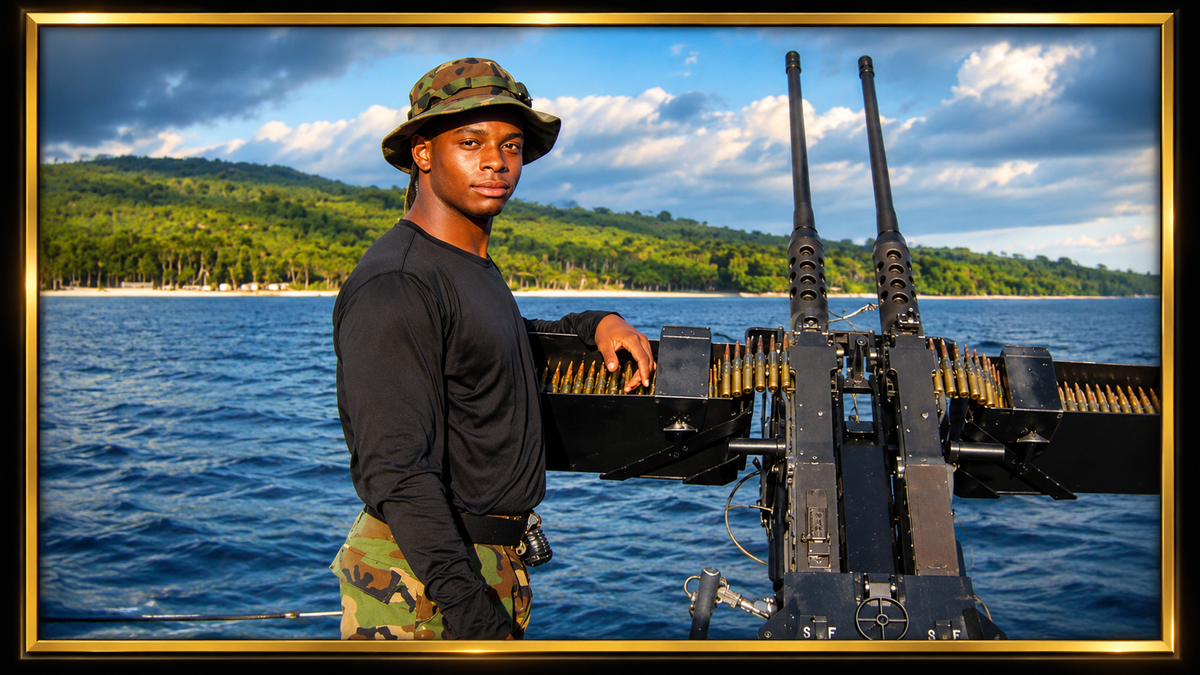
During his military career, he underwent rigorous Special Warfare Combatant-craft Crewman (SWCC) training and participated in operations across Thailand, Singapore, the Philippines, and Malaysia.
The experience exposed him to demanding environments where preparation, adaptability, teamwork, and disciplined execution were essential.
In military operations, individuals must understand their responsibilities while remaining fully aware of how their decisions affect the larger team.
These principles would later become invaluable in entrepreneurship.
"Veterans understand sleepless nights, teamwork, brotherhood and sisterhood, and how to work with people from all over," Bowers explains. "Those skills translate directly to entrepreneurship. When you build a business, you need people who can represent you and execute with discipline."
His observation reflects an important reality about the transition from military service to civilian leadership.
Veterans often enter the business world with extensive experience managing pressure, solving problems, coordinating teams, and making consequential decisions.
While those capabilities may have been developed in military environments, their relevance extends into corporate leadership, business ownership, operations management, and organizational development.
For Bowers, the Navy provided more than professional training. It reinforced a leadership philosophy grounded in accountability, collaboration, and service.
Following his military experience, he earned a business degree from the University of Houston-Downtown, further strengthening the foundation for his entrepreneurial ambitions.
His combination of operational discipline and formal business education would eventually help him recognize an opportunity in an industry far removed from military operations.
That opportunity was in beauty and hair care.
From an $800 Investment to a National Beauty Brand
Entrepreneurial success is frequently associated with access to substantial capital, influential investors, or sophisticated financial resources.
Marcus Bowers' experience challenges the assumption that a business must begin with significant financial backing to achieve meaningful growth.
With an initial investment of just $800, Bowers and his team began building what would become She's Happy Hair.
The company entered the competitive beauty and hair extension industry, where consumer expectations, product quality, pricing, distribution, and brand visibility play important roles in determining business success.
Rather than approaching the opportunity solely as a product-selling venture, Bowers emphasized operational strategy, business infrastructure, and systems capable of supporting expansion.
His experience in military operations helped shape his approach to execution.
A business could not depend exclusively on the energy or personality of its founders. It needed processes, dependable people, clear responsibilities, and the ability to adapt as market conditions changed.
Under his operational leadership, She's Happy Hair expanded its reach and developed a national presence.
The company also pursued strategies designed to make its products more accessible while creating new opportunities for growth.
Among the milestones described in Bowers' story was the brand's entry into Walmart stores, which the original magazine profile identifies as a pioneering achievement in the hair industry.
The company also introduced financing options for hair extensions, developed online automation strategies, and implemented large-scale promotional campaigns.
These initiatives reflected a willingness to rethink traditional approaches to selling beauty products.
For entrepreneurs, the underlying lesson is significant.
Business growth often depends not simply on having a desirable product, but on developing systems that make the product accessible, scalable, and commercially sustainable.
Bowers understood that operational excellence could become a competitive advantage.
And that understanding would become especially important when the global business environment experienced an extraordinary disruption.
When the World Shut Down, Innovation Became Essential
In 2020, the COVID-19 pandemic disrupted industries around the world.
Retail businesses confronted temporary closures, changing consumer behavior, supply chain complications, and uncertainty about the future.
For companies heavily dependent on physical locations, the challenges were particularly significant.
Yet according to the original magazine profile, She's Happy Hair experienced substantial sales growth during this period.
By leveraging online platforms, software automation, and supply chain strategies, Bowers helped increase company sales from $11 million to $16 million.
That represented approximately 45% growth.
The achievement illustrates the importance of adaptability in entrepreneurship.
When traditional business models become less reliable, organizations must be prepared to reconsider how they reach customers, fulfill orders, manage operations, and deliver value.
Digital infrastructure can provide businesses with additional flexibility, particularly during periods of disruption.
For She's Happy Hair, the combination of e-commerce capabilities and operational adjustments helped support growth during an exceptionally challenging period.
The broader lesson extends well beyond the beauty industry.
Whether someone operates a consulting firm, a retail business, a professional practice, or an online enterprise, the ability to adapt can be just as important as the original business concept.
For adults over 40 considering entrepreneurship or business reinvention, Bowers' experience demonstrates that technology and operational innovation are not exclusively the domain of younger entrepreneurs.
Experience, sound judgment, and a willingness to embrace new systems can be powerful assets at any stage of life.
The Courage to Serve Does Not End with Military Retirement
Although Bowers' business accomplishments are substantial, his commitment to serving others is equally central to his story.
Throughout his civilian life, he has continued responding to situations in which people needed immediate assistance.
During Hurricane Harvey, which devastated parts of Houston and surrounding communities in 2017, Bowers used a lifted truck to navigate flooded streets and help rescue stranded residents.
His actions reflected the same willingness to respond under pressure that had been reinforced during his military service.
During the COVID-19 pandemic, he also sourced and distributed face masks to protesters, providing practical assistance during a period of significant public health concerns and social unrest.
Perhaps one of the most striking examples occurred on June 15, 2026.
Exactly 25 years after enlisting in the Navy, Bowers found himself facing an unexpected emergency during his children's swimming lesson.
A baby was trapped inside a stroller that had become submerged in a swimming pool.
Bowers immediately jumped into the water to rescue the child.
The incident illustrates a recurring theme throughout his life: when circumstances demand action, he responds.
His story challenges the idea that service must be defined by a particular title, profession, or institution.
Military service may have formally concluded, but the values associated with it continued to influence his everyday decisions.
For Bowers, leadership is demonstrated not only in conference rooms or through business achievements, but also in moments when another person's well-being depends on someone's willingness to act.
Beyond Business: Building a Legacy of Opportunity
For many entrepreneurs, financial success eventually raises a larger question.
What comes next?
After establishing a profitable enterprise, some business owners focus primarily on personal wealth accumulation or expanding their own financial portfolios.
Bowers describes a different ambition.
He wants to create opportunities that allow other people to become successful.
"It's not even about the money," Bowers says. "I love creating opportunities for other people and building a legacy. My goal isn't to make as much money as possible—it's to open more stores, put other people in position, and create more millionaires. The goal is impact."
His statement reveals a philosophy centered on economic empowerment.
Business expansion, in his view, should provide pathways for others to develop skills, assume leadership responsibilities, create wealth, and improve their financial circumstances.
This approach connects entrepreneurship with the broader concept of generational wealth.
Generational wealth is not limited to passing financial assets from one generation to the next. It can also involve transferring knowledge, professional relationships, business ownership opportunities, and the skills necessary to sustain long-term financial independence.
For communities that have historically faced barriers to capital and economic opportunity, these forms of support can be especially meaningful.
Bowers' focus on helping others become successful suggests that he views entrepreneurship as a vehicle for expanding opportunity rather than simply increasing personal income.
It is a philosophy that also speaks to experienced professionals contemplating their next chapter.
After decades of developing expertise, building relationships, and navigating professional challenges, individuals may discover that one of their most valuable contributions is helping others achieve what once seemed beyond their reach.
The She's Happy Foundation: Turning Success into Community Impact
Bowers' commitment to community development extends into his philanthropic initiatives.
Through the She's Happy Foundation, he has supported efforts designed to strengthen communities and create opportunities for individuals and families.
According to the original magazine profile, the foundation received Houston's Humanitarian of the Year Award in recognition of its work.
His community initiatives also include Veterans and Family Field Day, hosted in partnership with Black Wall Street.
The event reflects his interest in supporting veterans and families while encouraging community connection and economic empowerment.
For individuals transitioning from military service to civilian life, community relationships and access to opportunities can be particularly important.
Veterans may possess extensive leadership experience and specialized skills while still encountering challenges translating those capabilities into civilian employment or business ownership.
Initiatives that connect veterans with supportive networks, entrepreneurial resources, and community organizations can help address some of those barriers.
Bowers' involvement in veteran-focused activities is consistent with his larger commitment to ensuring that military experience becomes a foundation for future opportunity.
His work reinforces a principle that applies across generations: meaningful leadership is measured not only by what individuals achieve, but also by what they make possible for others.
Navigating Challenges Without Losing Sight of the Mission
The entrepreneurial journey is rarely a straight line.
Even successful business owners encounter disagreements, operational difficulties, shifting market conditions, and complicated professional relationships.
Bowers' experience has included navigating complex business landscapes and corporate disputes.
The original magazine profile does not detail those disputes, but it emphasizes that his attention remains focused on future opportunities, veteran empowerment, and generational wealth.
That perspective is particularly relevant for readers who have experienced professional setbacks, career interruptions, or unexpected changes in their personal circumstances.
A difficult chapter does not have to define the remainder of someone's career.
Experience can provide perspective, while resilience creates the opportunity to redirect energy toward new objectives.
For professionals over 40, this message carries special significance.
By midlife, many individuals have accumulated considerable expertise alongside experiences that may include job loss, business challenges, family responsibilities, financial setbacks, or changing personal priorities.
Those experiences can become sources of insight rather than permanent limitations.
Bowers' journey demonstrates the importance of maintaining a clear sense of purpose even when the circumstances surrounding a business or career evolve.
Reinvention After 40: Why Experience Can Be Your Greatest Asset
One of the central themes of VINCE Lifestyle Magazine is that life after 40 offers meaningful opportunities for personal growth, professional reinvention, and financial independence.
Marcus Bowers' story aligns with that philosophy.
His entrepreneurial achievements were built upon capabilities developed through earlier experiences.
Military training strengthened his discipline. International operations exposed him to diverse environments. Formal education expanded his business knowledge. Community involvement reinforced his understanding of responsibility.
Together, those experiences contributed to his development as a business leader.
For readers contemplating a new venture, his journey offers several practical lessons.
Begin with the resources available to you. Bowers' business story began with $800, demonstrating that a modest initial investment can become the starting point for a larger enterprise when supported by a viable business model and disciplined execution.
Translate your existing skills into new opportunities. Leadership, project management, problem-solving, and teamwork are valuable across industries. Skills acquired in one profession may become competitive advantages in another.
Build systems, not simply activities. Sustainable businesses require processes that support consistent execution, customer service, and growth.
Remain adaptable. The expansion of She's Happy Hair's digital operations during the pandemic illustrates the potential value of responding strategically to changing conditions.
Define success beyond financial performance. Revenue and profitability matter, but creating opportunities for employees, families, and communities can give entrepreneurship a broader purpose.
None of these lessons suggests that entrepreneurship is easy or that financial success is guaranteed.
Rather, they demonstrate how preparation, persistence, adaptability, and strategic thinking can improve an entrepreneur's ability to navigate challenges.
For those considering a second career, launching a consulting practice, developing a digital business, or transforming years of expertise into a new source of income, the most important first step may be recognizing the value of what they already know.
Don't Wait to Be Great: A Message for the Next Generation
When Marcus Bowers speaks to active-duty military personnel, veterans transitioning into civilian careers, and aspiring entrepreneurs, his message is direct.
Do not postpone your ambitions while waiting for someone else to validate your potential.
"Whatever your dream is, start becoming it now," Bowers advises. "Don't let a certificate or somebody else's permission determine when you can begin becoming who you want to be."
His words speak to a challenge that extends across generations.
Many capable individuals delay pursuing their ambitions because they believe they need another credential, additional resources, greater confidence, or external approval before taking action.
Preparation remains important, particularly in professions requiring licenses, certifications, or specialized qualifications.
However, Bowers' message encourages people to distinguish between legitimate requirements and unnecessary self-imposed limitations.
There are meaningful steps individuals can take toward a goal long before every circumstance is ideal.
An aspiring entrepreneur can research a market, develop a business plan, strengthen professional relationships, or test a concept.
A professional considering reinvention can begin developing new skills or exploring opportunities that align with existing experience.
A veteran transitioning to civilian life can identify how military leadership capabilities translate into business and organizational roles.
Progress does not always begin with a dramatic decision.
Sometimes it begins with the willingness to see oneself differently.
The Next Chapter: Creating More Than a Business Empire
Today, Marcus Bowers continues to focus on the future, with particular attention to empowering veterans, expanding economic opportunities, and helping others build lasting financial stability.
His ambitions reflect a progression from individual achievement toward broader community impact.
The man who began his military career in 2001, helped establish a national beauty brand with an $800 investment, and responded to emergencies in his community continues to define leadership through service.
His story is not simply about building a successful company.
It is about recognizing that discipline can become opportunity, that business ownership can become a platform for economic empowerment, and that personal achievement can create pathways for others.
For VINCE Lifestyle Magazine readers, his journey offers an encouraging perspective on the possibilities that remain available throughout adulthood.
A new business can begin after years in another profession. Leadership can take different forms as circumstances change. Financial success can become a foundation for philanthropy and mentorship.
And a person's most meaningful contribution may emerge long after the chapter they originally believed would define their life.
Marcus Bowers' experience illustrates that the pursuit of success and the commitment to service do not have to be competing priorities.
They can become complementary parts of a lasting legacy.
Because ultimately, the measure of a remarkable life may not be how much we accumulate, but how many people are better positioned to succeed because we were here.
Learn more: https://marcusbowerstv.com/
About VINCE Lifestyle Magazine
VINCE Lifestyle Magazine is a digital lifestyle publication and community dedicated to helping adults 40+ live healthier, more purposeful, and financially empowered lives.
Through inspiring personal stories, health and wellness insights, travel experiences, entrepreneurship resources, and conversations about reinvention, VINCE celebrates the possibilities of life's next chapter.
Explore more inspiring stories and join our community for free at www.vincemag.press.
Editor's Note: This expanded editorial feature is adapted from the Marcus Bowers magazine profile supplied to VINCE Lifestyle Magazine. Business milestones, personal accounts, and organizational achievements are based on that source and have not been independently verified for this adaptation.
Subscribe Today: Read the Interview Transcript between Vince Ferguson and Marcus Bowers.