
Training in 2026: Why “Working Out” Is Now About Precision

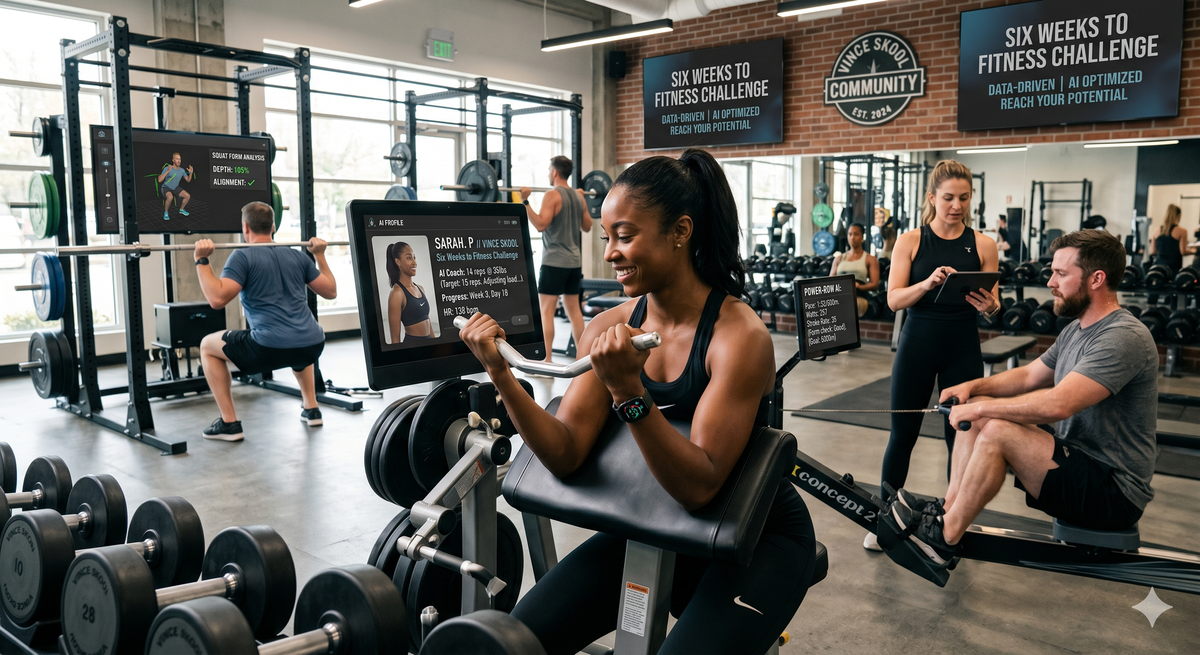
In 2026, fitness is no longer defined by simply showing up at the gym. The landscape has shifted toward something far more intentional—precision, personalization, and data-informed decision-making.
Within the Six Weeks to Fitness Skool, the focus has expanded beyond effort alone. The goal is no longer just to train harder, but to train smarter, using every available tool to support consistency and results.
Artificial intelligence is no longer reserved for tech companies or elite performance labs. It has become an accessible extension of coaching, offering everyday individuals something unprecedented: real-time insight into how their body is responding, adapting, and recovering.
Three Ways AI Is Reshaping Wellness
The evolution of fitness technology is already changing how people approach their health. What was once generalized is now increasingly individualized.
1. Smarter, Personalized Training
Traditional one-size-fits-all workout plans are quickly being replaced by adaptive systems that respond to individual performance.
Modern AI-driven platforms can analyze training history, available equipment, recovery patterns, and even signs of fatigue to recommend workouts tailored to the individual in real time. The result is a training experience that adjusts as the body changes, rather than forcing the body to conform to a static plan.
2. Real-Time Recovery Awareness
Wearable technology has moved beyond basic step tracking and heart rate monitoring. Newer systems now provide deeper insight into recovery through metrics such as heart rate variability, sleep quality, and overall readiness.
These indicators offer a clearer picture of when to push forward and when the body may benefit from active recovery. This shift introduces a more sustainable approach to progress—one that respects recovery as part of performance, not separate from it.
3. Smarter Nutrition Feedback
Nutrition tracking has also become more intuitive. AI-powered tools now allow users to log meals through simple photo capture, estimating macronutrients and offering feedback based on individual goals.
Over time, these systems begin to recognize patterns, helping guide more informed decisions about portion sizes, timing, and nutritional balance without the need for constant manual tracking.
The Philosophy: Technology Supports Discipline
While technology continues to evolve, one principle remains unchanged: data alone does not create results.
Artificial intelligence can provide insight, structure, and guidance, but it cannot replace consistency, discipline, or commitment. It can highlight what is happening in the body, but it cannot decide to show up for the workout.
Used correctly, AI becomes a support system rather than a substitute. It helps remove guesswork, increases awareness around recovery, and provides measurable feedback that reinforces progress over time.
In this way, technology becomes the compass—but the individual remains the driver.
The Bottom Line
The future of fitness is not about choosing between human effort and artificial intelligence. It is about understanding how the two work together.
One provides data. The other provides direction.
And when both are aligned, progress becomes not only more efficient, but more sustainable.
The question is no longer whether AI belongs in fitness.
It is how intentionally it is being used.
What tools are you currently using to track your training, recovery, or nutrition?
It's FREE to join Six Weeks to Fitness with Vince Skool.